code verification
11 posts carrying this tag.
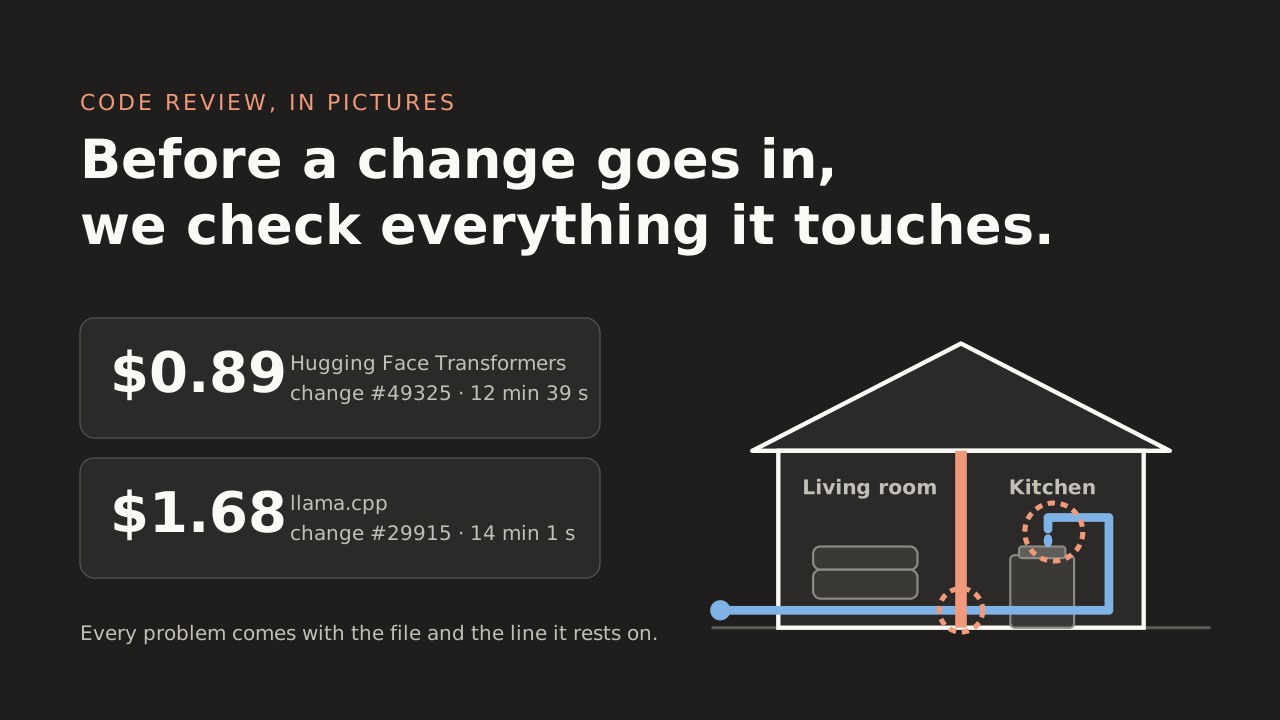
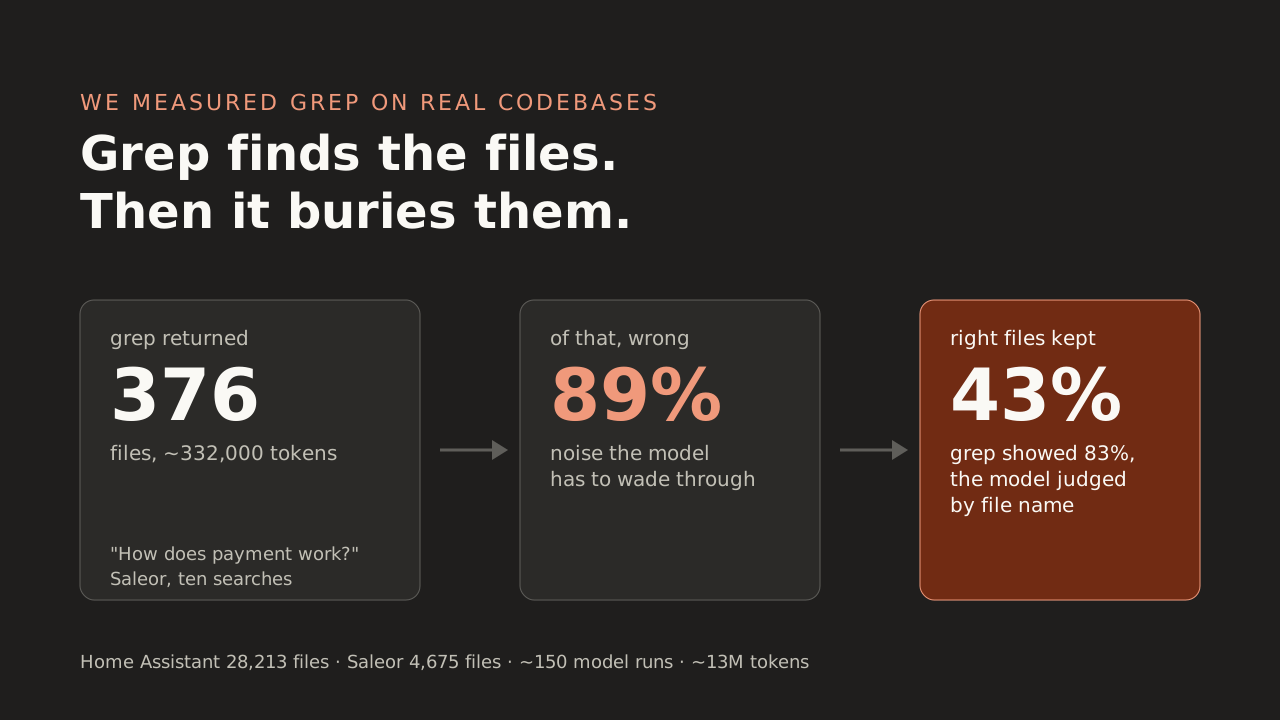
We Measured Grep on Real Codebases. Here's What Actually Breaks.
We measured how coding agents search with grep on Home Assistant and Saleor: about 150 model runs and 13 million tokens. Grep finds the files, then buries them in noise, and it can't follow inheritance or code that never says the name. A bigger model doesn't fix it.
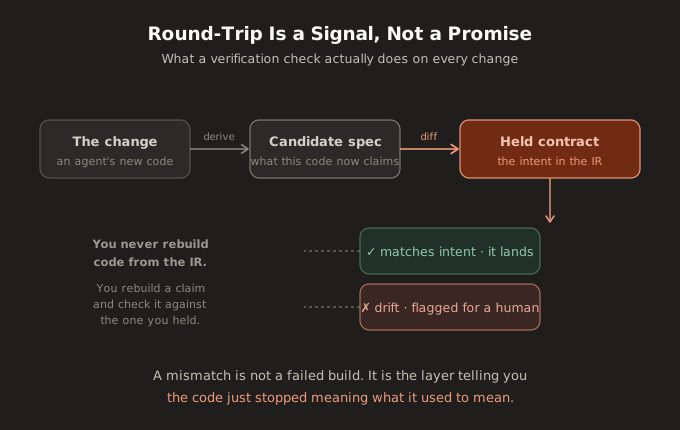
Round-Trip Is a Signal, Not a Promise: How a Verifiable IR Checks Code Against Intent
A technical note on what 'verifiable' actually means in a verifiable code IR. Not a machine that rebuilds your code from a document, but a derived contract that every change gets checked against. Here is what a single verification check consists of, why round-trip is a signal and never a promise, and the honest boundary of what it can and cannot catch.
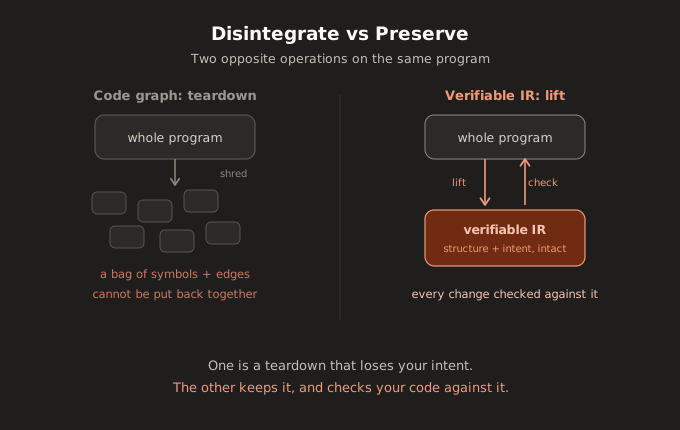
A Code Graph Disintegrates Your Code. A Verifiable IR Preserves It.
A code graph takes a whole, coherent program and shreds it into a bag of symbols and edges. It is genuinely useful, but it is a teardown, and the meaning never survives the pieces. A verifiable intermediate representation is the opposite move. It lifts your code into a higher layer that keeps the intent intact, then checks every change against it. Here is the difference between shredding and preserving, and why it decides everything downstream.
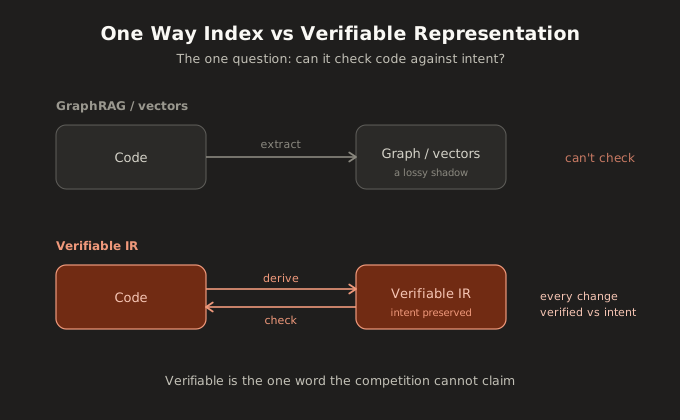
What Verifiable Means for Code Context, and Why GraphRAG Can't Check Code Against Intent
Verifiable is the one word competitors cannot claim. A code graph extracts a shadow of your code and can never tell you whether the code still does what it is supposed to. A verifiable intermediate representation is a derived contract that every change gets checked against. Here is what verifiable actually means, why GraphRAG and vector search can only retrieve, and what continuous verification unlocks.
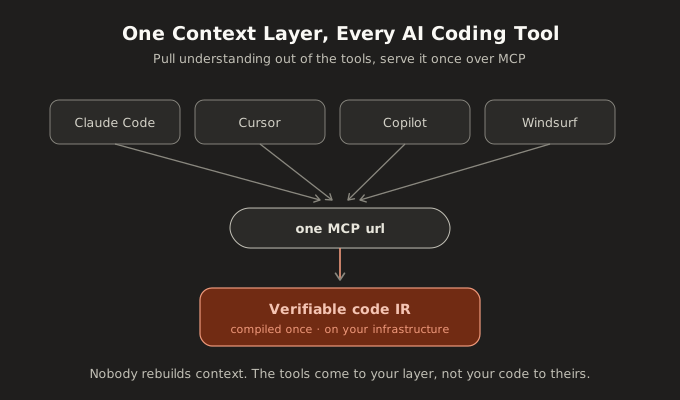
One Context Layer, Every AI Coding Tool: Serving a Verifiable IR Over MCP
Your team uses Claude Code, Cursor, Copilot, and Windsurf, and each one rebuilds an understanding of your codebase from scratch and shares nothing with the others. MCP is the standard that lets you stop doing that. Compile your repos once into a verifiable IR and serve it to every tool over one MCP endpoint. Here is why the context layer belongs outside the tool, and what changes when it does.
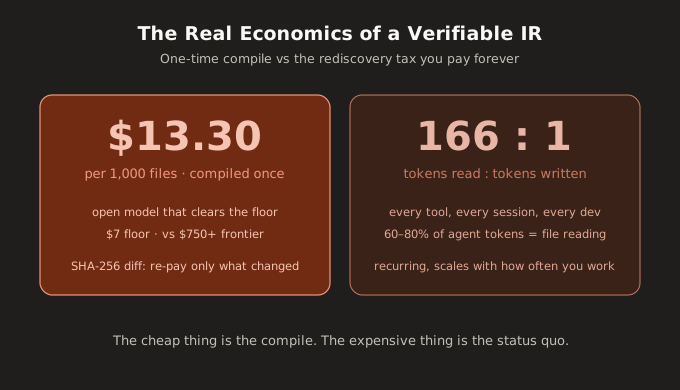
$13.30 to Compile 1,000 Files Into a Verifiable IR, Once
The objection to compiling a codebase into a verifiable IR is always cost. It sounds like Opus pricing across every file. It isn't. At open-source-model rates it runs about $13.30 per 1,000 files, you pay it once, and per-file diffing means you only ever re-pay for what changed. Here is the real economics of the verifiable context layer, and why the expensive thing is not building the IR but living without one.
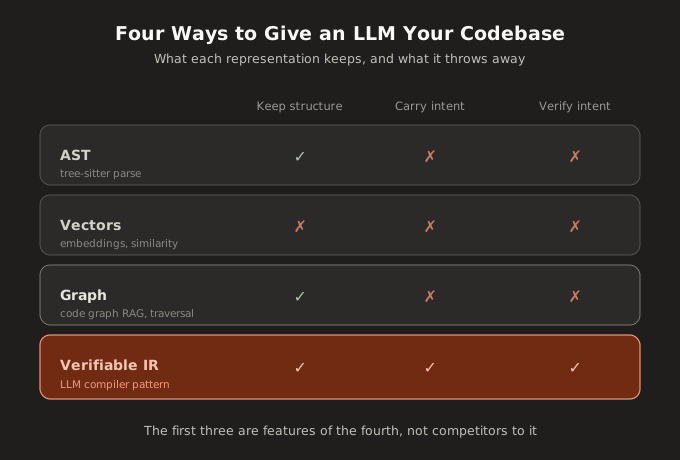
AST vs Vector vs Graph vs IR: Four Ways to Give an LLM Your Codebase
Every tool that feeds your codebase to an AI coding agent picks one of four representations. AST parsing, vector embeddings, code graphs, or a verifiable intermediate representation. Here is what each one keeps, what each one throws away, and why the first three are features of the fourth.
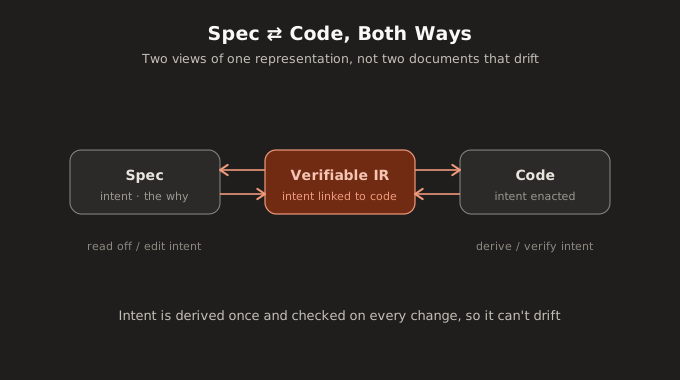
Spec-Driven Development for Brownfield: Verify Code Against Intent With a Verifiable Code Context Layer
Specs and code drift apart the day after you write the PRD, because they are two separate documents that nobody keeps in sync. A verifiable context layer derives the spec a codebase actually implements and then continuously checks the code against it. Here is how spec-driven development works on a brownfield codebase, and why it needs a verifiable code IR that checks code against intent.
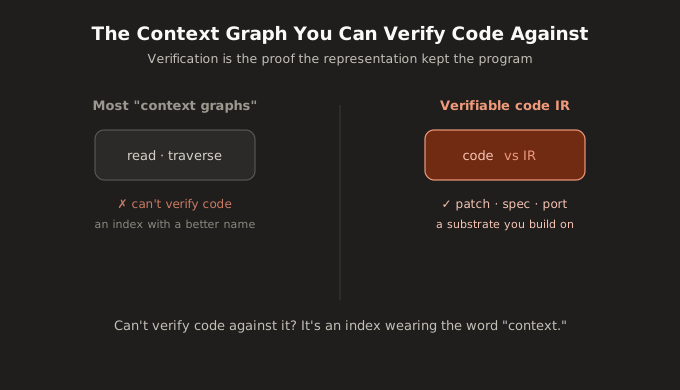
The Context Graph You Can Verify Code Against
Context graph is a term people understand and reach for. But most things called a context graph are one-way extractions you can read and never check anything against. The version worth wanting is the one you can verify code against, and that single requirement is what separates an index from a verifiable code IR. Here is what verification demands, and why it is the only honest test of a context graph.
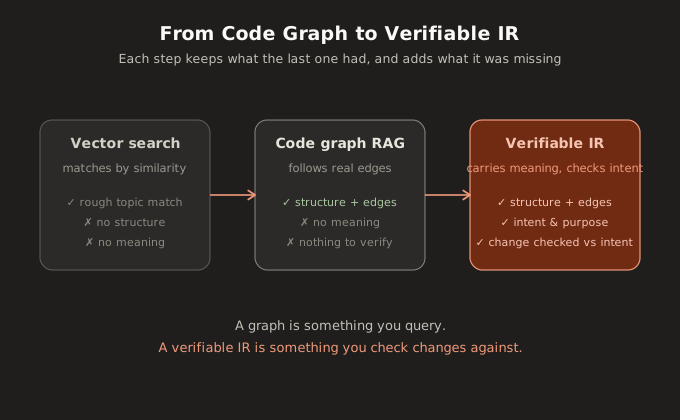
Code Graph RAG, Explained, and Why a Verifiable IR Is the Next Step Past It
Code graph RAG fixed the biggest flaw in vector search. It follows real edges instead of guessing at similarity. But a graph of symbols is still not a graph of meaning, and it cannot tell you whether a change still does what the system is supposed to do. Here is how code graph RAG actually works, where it stops, and why a verifiable intermediate representation is the layer above it.